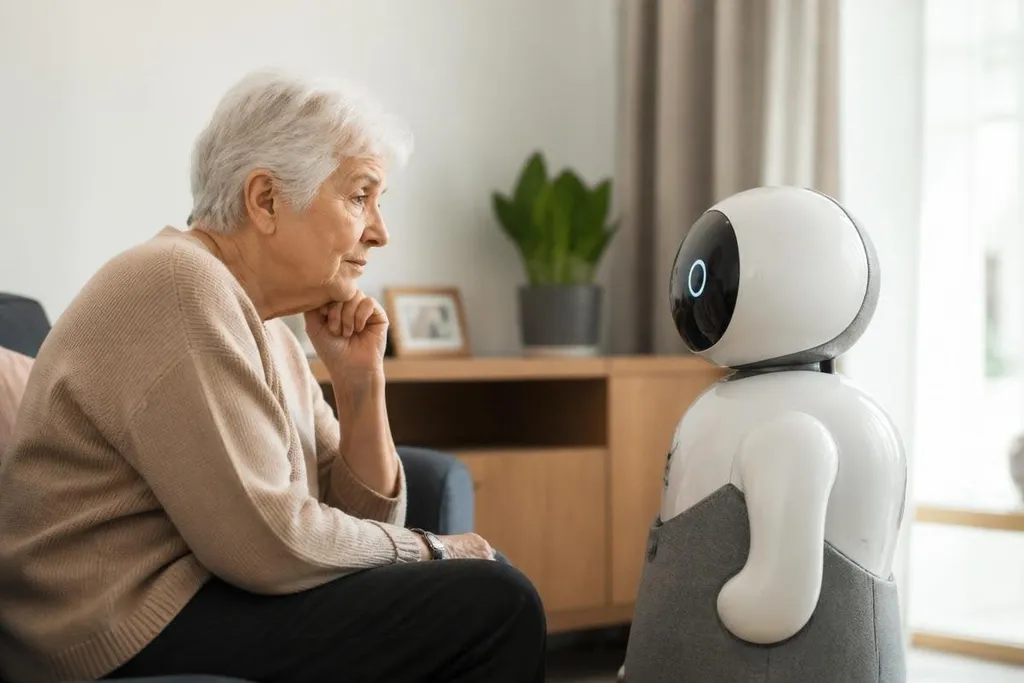
Machines that smile, remember your name, and answer in a warm voice can feel close to a person. The machine still has no feelings, so its social behavior raises a practical question: how much should people trust a system built to seem caring?
Quick read
- Emotional behavior comes from sensors, software, and chosen responses, not human feelings.
- The main risks involve deception, private data, attachment, and unclear responsibility.
- Clear labels and simple controls should come before wider use in homes, schools, and care settings.
What an emotional robot actually does
An emotional robot reads signals such as speech, facial movement, body position, and touch. Cameras and microphones collect some of that information, while software sorts it into signs such as stress, attention, or anger.
The robot then selects a response. It may change its voice, turn its head, pause before speaking, or display a facial expression. A language model can help produce a reply that sounds patient, but the reply does not prove that the robot feels concern.
That gap matters because people judge social behavior quickly. A soft voice can make a warning feel safer. A robot that says it is worried may lead someone to treat its statement as a personal feeling rather than a programmed output.
In a care home, the robot might remind someone to take medicine or call staff after a fall. The ethical problem starts when its human-like behavior hides how the system works, what it records, or who controls the response.
The main ethical questions
The first question is honesty. Its limits should be clear when a person may mistake a simulated feeling for a real one. This matters most for children, people with memory problems, and anyone using the robot during fear or pain.
Privacy is tied to that problem. A social robot may need a camera, microphone, or touch sensor to read a person’s state. That data can reveal health concerns, routines, arguments, or time spent alone. You need to know where the data goes, how long it stays there, and who can delete it.
Attachment creates another concern. People can form habits around a robot that remembers conversations and responds with familiar words. The bond may feel real to the person even when the robot has no inner life. A company could then use that bond to sell upgrades, collect more data, or keep a user from switching products.
Responsibility also needs a named owner. If a robot gives poor advice, misses a cry for help, or reports the wrong emotional state, the maker, operator, and carer must not point at one another. A human still needs to check high-risk decisions.
When emotional features move from a lab demo into care work, the record needs the robot, test site, and human decision-maker named. Dated robotics reporting from Robot24.com can put those facts beside the maker’s claims before the discussion turns to where rules should start.
Where rules should start
A useful policy does not need to ban a robot from sounding warm. It needs to control the moments when warmth can affect a person’s choice or trust.
Designers should label simulated emotion in plain language. A screen or spoken notice could say that the robot detects signals and produces responses; it should not claim to feel sadness, love, fear, or pain.
People should also get a visible way to pause sensors, inspect stored data, delete records, and reach a human. These controls matter more than a polished face because they give the person a way to stop the system when its behavior feels wrong.
The same rule applies to sales and care. A robot should not use guilt, threats, or signs of distress to push a purchase, keep a child talking, or replace a human check during a medical decision.
A buyer’s safety checklist
Before putting an emotional robot in a home or workplace, check these points:
- Name the user: Decide who may be affected and who can change the settings.
- Check the sensors: List every camera, microphone, touch sensor, and network link.
- Read the data rule: Find the storage period, deletion method, and third-party access.
- Test the label: Confirm that the robot says when its emotional response is simulated.
- Set human review: Keep a person responsible for health, safety, money, and care decisions.
- Plan the exit: Know how to pause the robot, remove the data, and end the service.
These systems can be polite, calm, and useful without pretending to have a private emotional life. I'd reject any system that makes people guess whether its feelings are real, especially when that confusion affects care, money, or consent.
The next test is simple: can a person see what the robot senses, what it stores, and when a human takes over? If the answer is no, the robot needs clearer limits before it earns trust.